

10-10-2026
22-01-2026

"It's all still there, it’s just buried" ↗

Not to get too melancholic about it, but it felt 2025 was the year the industry hit a low point, and dragged me down with it. You likely feel the same way, based on your overwhelming feedback (except for one of you who said Claude Code was “good, actually”). I don’t want to go as far as to call it a mid-life crisis, but more a general sadness and sense of ennui at a world seemingly hellbent on seeing the two possible ways of doing something, and choosing the bad one every time. 2026 has only accelerated this trend, whether it be represented in shows like CES, or the continued hosing down of fires with investor capital.

[…]

In a more practical sense, I’ve also found renewed interest and joy in all the stuff that Torb describes. Paring down my RSS feeds away from the general tech news and focusing on real people doing real things and thinking real thoughts has been nothing short of a revelation. All that cool, innovative, fun, creative, wonderful stuff that I missed is all still there, it’s just buried.

– Ruben Schade, Rubenerd

28-12-2025

the magic that internet is ↗

I, on the other hand, am absolutely appalled by the magic that internet is. Even though having understood the finer intricacies of TCP/IP, it still feels like magic to me. The world however, has taken it for granted. We, collectively, have not only lost the fascination towards magic but have also left our inner child behind by becoming preoccupied with thoughts and activities which, in the grand scheme of things, will turn us into emotional robots.

– Mitesh Shah, oxalorg

The IndieWeb in 2030 ↗

The IndieWeb is, as far as I can tell, a community of people who advocate certain digital principles and support each other in working towards those. The most famous principle is Publish (on your) Own Site, Syndicate Elsewhere. There are a variety of initiatives such as the monthly blog carnival (which I have hosted in the past) and online/in-person meetups.

The indie web, on the other hand, is a (very) much larger universe of websites run by individuals who wish to express their independent creativity.

[…]

Over the next five years to 2030, we are going to see an explosion of indie web creators. The technical hurdles that exist today in setting up a website will be blown aside by AI. Soon, anyone will be able to establish their own website simply by writing down what they want it to do.

– Chris, uncountable thoughts
09-11-2025
08-11-2025

Algotorial

“Algotorial” bezeichnet eine Mischung aus algorithmischer und redaktioneller (editorial) Kuration und wurde offenbar von Spotify gecoint. Vor allem Meg Tarquinio, die ehemalige Head of Curation Strategy, scheint dafür verantwortlich. Sie redet in diesem Podcast darüber, der jetzt in meinen Lesezeichen landet.

Knowing what songs might be particularly “singable” is difficult to describe in algorithms. It might be the song that was on repeat last summer, or a particularly catchy refrain that is repeated over and over. Maybe it appeared in a TV show or movie recently to remind you of your teenage years. It’s hard to describe why, but you know it when you hear it. This is where human intuition comes in.

Ich habe inzwischen tatsächlich in den Podcast hereingehört und fand diese Stelle über die Notwendigkeit (oder vielmehr Überflüssigkeit) von individuellem Geschmack bei Kuration sehr aussagekräftig:

I actually am like anti-taste. I don’t know that I believe in good taste or bad taste. A lot of times I think there’s this myth around editors and curation that suggests, ‘Oh, this person loves this song so they’re going to put it into a playlist.’ But I think for good curators, or just curators in general, that’s not how it works.

Of course, if you’re a curator in a space that you love – like folk music – and you’ve grown up listening to folk music, you’re going to love a lot of the music that you’re programming. But you’re not programming it because you love it. That’s just kind of a correlation versus causation situation.

I think you’re programming it because you understand the space and you understand the audience, and you know that they would love it in this specific context. So I think the more that you can divorce your personal taste from what you’re doing, or at least have an awareness that that’s just an association versus a reason for anything that you’re doing – that’s the way to go for sure.

– Meg Tarquinio, ex-Head of Curation Strategy, Spotify
27-10-2025

alive internet theory ↗

We are all so online, yet being online feels so solitary. I can’t feel the people across the feeds from me. Social media is designed for consumption of content, distribution of branding, broadcasting of prestige, not spontaneous encounters or the warm, funny, and weird moments that happen when humans simply exist together.

But what if we had the tools to reshape it? We could make our own public parks, cafes, bodegas, waterfalls, and mountains. We could carve out spaces that we inhabit and maintain, becoming active stewards rather than just users.

If dead internet theory posits that the internet will eventually become only bots, alive internet theory proclaims we will never let the open internet die. We will always find a way to look for each other, to answer a call for help, to share a laugh and an argument right after one another. If there’s one trait of the human race that every apocalypse movie agrees on, it’s our will to survive.

– Spencer Chang, tiny internets
12-10-2025

"That's what I mean when I say something is 'on the web.'" ↗

The way our online writing world has been siloized, basically no one has that. We’re going to try to fix that, and not with just my software, but by setting some new standards for interop, extensions to RSS, so that there’s no exclusivity to making software for writers or publishers. That’s what I mean when I say something is “on the web.” If your system is not 100% replaceable, today, they you are not on the web and should not claim it. If you’re thinking about freedom, btw – this should be part of your big picture. So many smart people don’t want to know how our networks work, and that makes you a victim. And it’s not that hard to understand, no matter what people have led you to believe.

– Dave Winer, Scripting News
04-02-2025

WikiTok ist "infinite scrolling wikipedia" ↗

Ich hatte irgendwie das Gefühl, über genau so ein Projekt schon mal gestolpert zu sein – aber vielleicht habe ich das auch nur geträumt. Oder es ist eine doch nicht so wahnsinnig originelle Idee, auf die zwei Menschen irgendwann mal unabhängig voneinander gekommen sind (oder ich bin einfach nur neidisch, dass ich sie nicht hatte?)

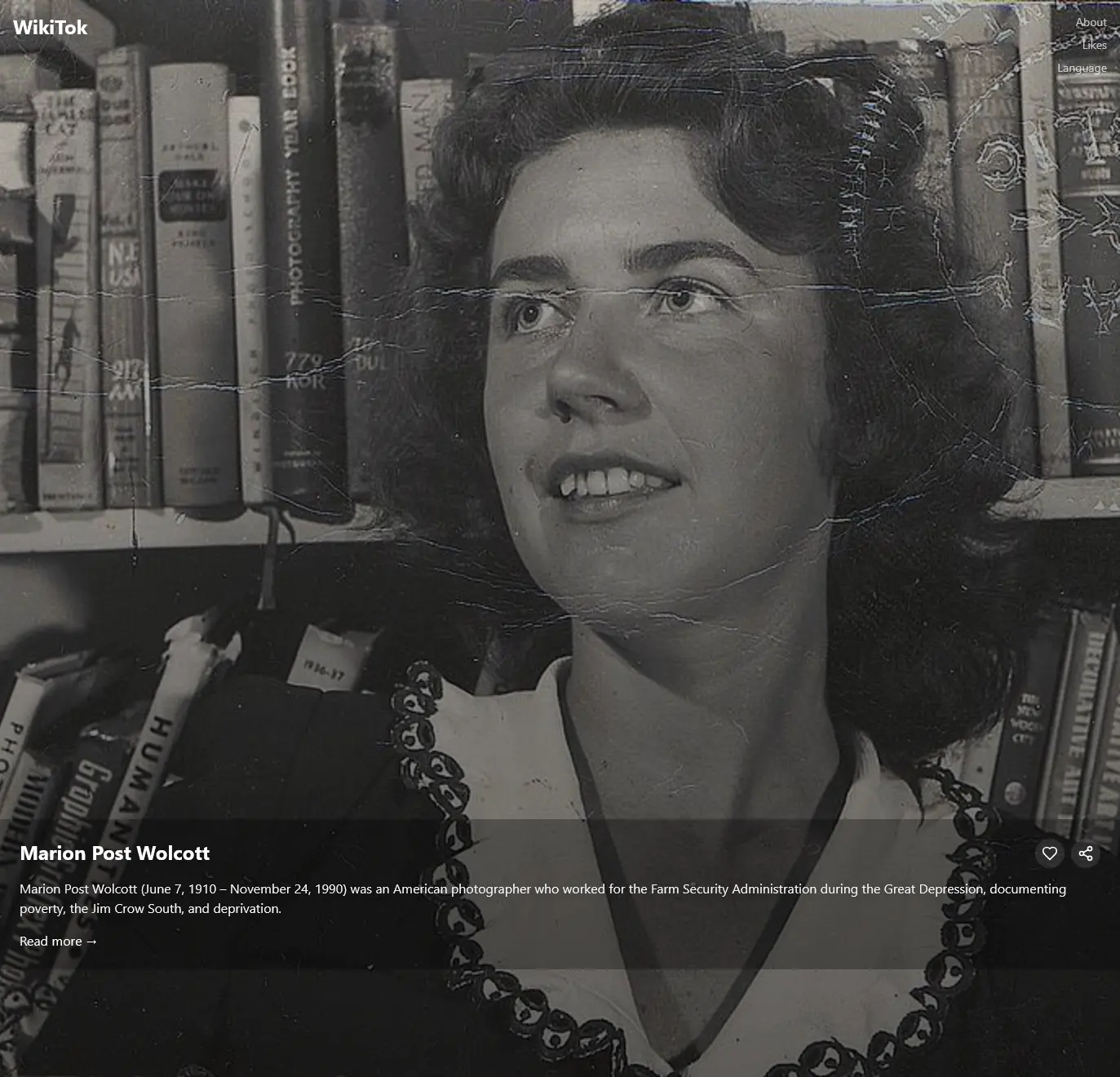
Ausgehend von diesem X-Beitrag jedenfalls handelt es sich bei WikiTok um ein aktuelles Nebenprojekt von User aizk: Ganz wie bei TikTok könnt ihr hier unendlich weiterscrollen, nur statt Airfryer-Rezepten, Medikinet-Erfahrungsberichten oder singenden KI-Katzen gibt’s eben Wikipedia-Artikel über die nicht sonderlich erwähnenswerte, britische Fregatte HMS Valorous, die US-Fotografin Marion Post Wolcott oder die französische Kommune Aniche. Den Code findet ihr open-source auf GitHub.

wikitok-screenshot-marion-post-wolcott.webp

27-08-2024

Jeder zweite TikTok-Post ist Werbung oder Produktempfehlung ↗

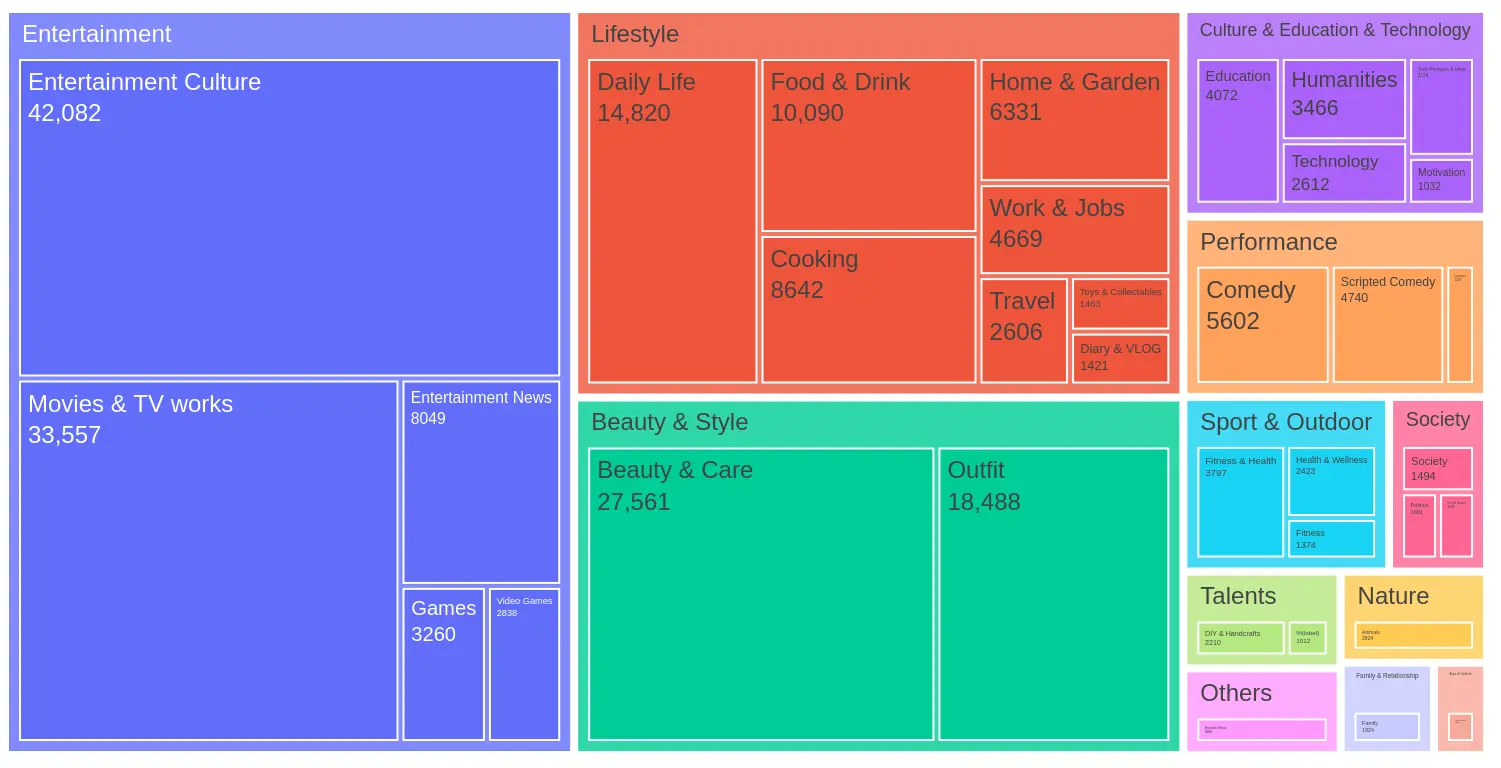
Personalization: The For You feed becomes increasingly personalized over time, with up to 80% of videos matching predefined user interests after about an hour of scrolling. In the other side the highest amount of shared videos among users occurs within the first 15 minutes of using the app, decreasing later as content becomes more personalized.

Commercial Content: On average, 21% of videos in users’ watchlists were from accounts indicating commercial interest, without being labeled as official ads. This is in addition to the 20% of videos that are official ads, that we have previously measured.

User Perception: In our survey, users estimated that every second post on TikTok is an advertisement or product recommendation, closely matching our findings on the prevelance of commercial content.

understanding-tiktoks-for-you-feed-categories.webp